
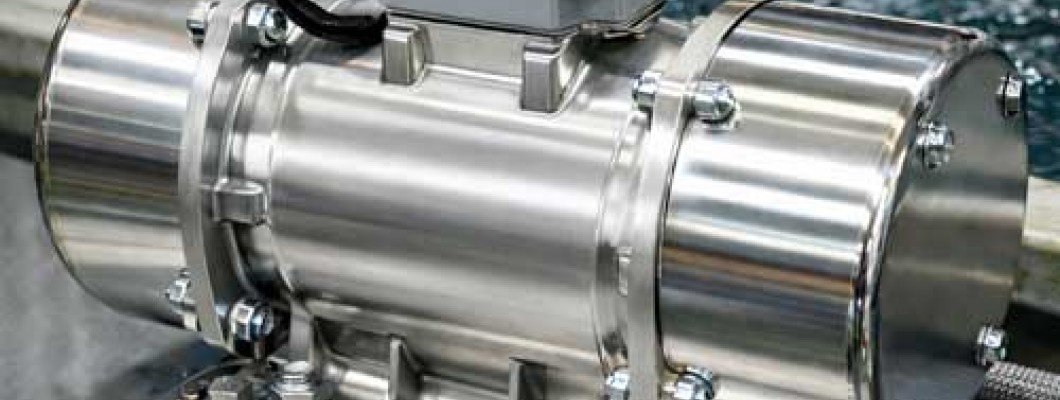
Vibration Motors for Electroplating – Enhance Coating & Efficiency
Electroplating processes demand uniform coating thickness, consistent surface finish, and efficient material movement. Vibration motors play a vital role in electroplating systems by improving solution contact, preventing part sticking, and enhancing overall process efficiency. They are widely used in plating tanks, barrel plating machines, part feeders, and component handling systems.
This article will describe how the vibration motors support electroplating operations and how to select the right motor for corrosive plating environments.
Why Vibration Motors are Used in Electroplating Industries
In the electroplating process, proper movement of components is essential to ensure even exposure to electrolytes and consistent electrical contact. Vibration motors generate controlled vibration that helps:
- Preventing components from sticking or overlapping
- Improving electrolyte circulation around parts
- Achieving uniform metal deposition and thickness
- Reducing plating defects and rework
How Vibration Motors Improve Electroplating Processes in Barrel and Vibratory Tanks
- Barrel Plating Machines
Vibration motors are widely used in barrel plating machines, such as rotating and agitating plating barrels, separating parts during electro-plating, and improving coating uniformity on small components such as screws, nuts, and fasteners.
- Vibratory Plating Tanks
In open or semi-closed tanks, vibration motors are used in enhancing solution movement, preventing sediment buildup, improve ion distribution for consistent plating thickness, and etc.
- Part Feeding & Handling Systems
Before and after plating, vibration motors are used in vibratory feeders and conveyors to move parts smoothly without damage, to maintain consistent spacing, reducing manual handling and contamination.
- Rinsing & Drying Stations
Vibration motors assist in removing excess solution after electro-plating, improving water drainage during rinsing, and speeding up drying processes to have efficient process.
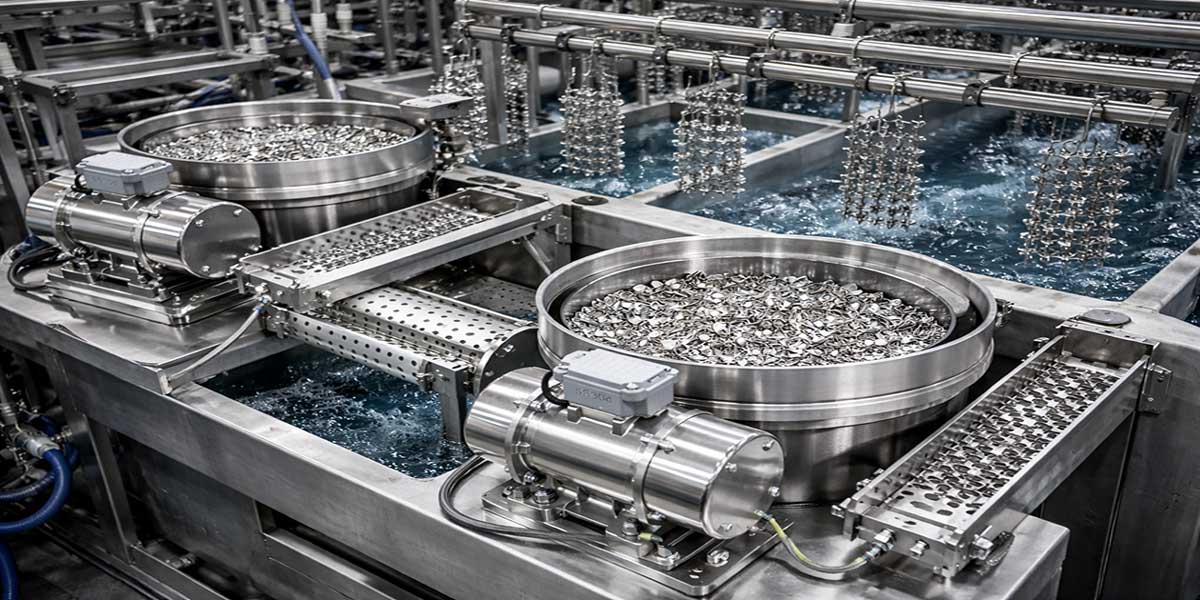
Key Benefits of Using Vibration Motors for Electroplating Efficiency:
Using vibration motors in electroplating systems provides several advantages, including uniform plating thickness, improved surface finish, reduced plating time, lower chemical consumption, increased productivity, consistent quality across batches, and saving on the overall operational costs.
Key Requirements for Electroplating Vibration Motors
Electroplating environments are highly corrosive, so vibration motors must meet specific technical requirements:
Corrosion Resistance
- Stainless steel housing or epoxy-coated aluminum construction
- Sealed construction to resist acids, alkalis, and harsh environments
Protection & Sealing
- High IP rating (IP65 / IP66 or higher)
- Corrosion-resistant vibration motors with moisture-proof and chemically-resistant seals
Adjustable Vibration Force
- Variable eccentric weights that can be adjusted if needed.
- Compatibility with speed controller for DC brushless vibration motor and VFDs for AC vibration motor to adjust the vibration frequency.
Continuous Duty Operation
- Designed for 24/7 industrial use
- Stable performance under fluctuating loads
Types of Vibration Motors Used in Electroplating
- AC vibration motors – Commonly used for tank and barrel applications
- DC vibration motors – Used for compact or low-voltage systems
- Explosion-proof vibration motors for chemical environments – Required for chemical-intensive environments
- Low-speed vibration motors – Ideal for delicate or precision plating applications
How to choose vibration motors for electroplating operations
When choosing a vibration motor for electroplating applications, buyers need to consider the factors such as tank size, load capacity, the type of electrolyte used, the required protection grade, operating temperature and humidity, required vibration frequency & amplitude, and mounting position & space availability. Additionally, custom-configured vibration motors can significantly improve plating quality and reduce maintenance costs.
Related Articles
What is Vibration Motor?
What Causes a Vibration Motor to Overheat?
Application of Vibration Motors in PCB Circuit Board Industry