
Introduction
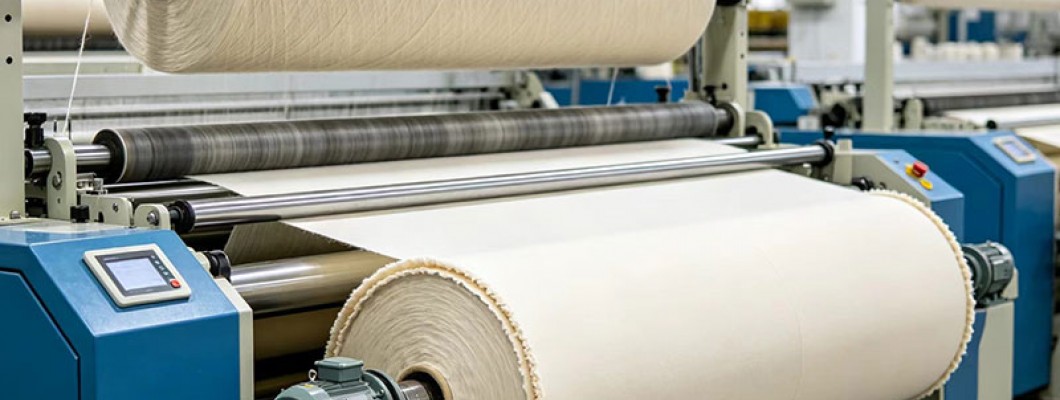
In automated winding production lines, maintaining stable tension is crucial for ensuring the quality of the finished product. Traditional friction-based brakes are difficult to adjust in terms of torque and often cause significant shocks during start-stop cycles, making them ill-suited for the precise processing of coiled materials. As a primary component for flexible torque control, magnetic particle brakes, leveraging a linear relationship between current and torque, are widely used in equipment for slitting, printing, cable manufacturing, and textiles. This article provides a comprehensive guide to selecting magnetic particle brakes, covering their operating principles, classifications, industrial applications, and key maintenance requirements.
I. Why can't traditional brakes ever achieve precise tension control?
Traditional mechanical or friction-based brakes rely on physical, rigid friction to control speed and braking. This approach has inherent flaws that make it entirely unsuitable for modern, high-precision winding processes:
- Poor tension accuracy: Braking resistance cannot be finely adjusted; it fluctuates during operation, leading to severe tension instability at high production speeds and making constant tension control impossible.
- High wear and failure rates: Continuous, rigid friction causes significant wear and heat generation. Over time, this leads to issues such as slippage, loss of control, and weakened braking force.
- High risk of material damage: These systems lack inertial buffering, meaning that equipment start-ups, shutdowns, or roll changes create sharp impacts, easily damaging flexible materials like films, filaments, paper, or fabrics.
- Poor operational performance: High noise levels, noticeable equipment vibration, and a lack of stability make these brakes incompatible with the high-precision, high-speed requirements of modern automated production lines.
For industrial applications requiring smooth, consistent, and finely adjustable tension control, traditional friction-based braking is no longer adequate to meet the demands of modern manufacturing. Magnetic powder brakes, by contrast, are a new generation of flexible braking devices designed specifically to resolve these production pain points; they have become the standard, core component for modern winding equipment.
II. Working Principle of Magnetic Particle Brakes
Magnetic particle brakes for tension control are precision automation components that generate braking torque by using electromagnetic force to magnetize a magnetic particle medium. Their core architecture, comprising an excitation coil, a sealed magnetic particle chamber, a high-precision rotor, and an integrated heat-dissipation structure, ensures both mechanical precision and operational stability.
The operating logic is straightforward and allows for fully flexible, controllable performance:
- When unpowered: The magnetic particles inside the unit remain loose and free-floating. The rotor spins without resistance or mechanical friction, resulting in zero no-load loss and smooth, effortless operation.
- When supplied with 24V DC: The coil rapidly generates a uniform, stable magnetic field. The ultra-fine magnetic particles within the chamber are instantly magnetized, aligning into dense, rigid chains that create a uniform, flexible, and controllable braking torque within the gap between the rotating and stationary components.
A key, irreplaceable advantage of this technology is the strictly linear, proportional relationship between electrical current and braking torque.
In simple terms: a minute adjustment to the current results in a precise, corresponding change in tension. This enables seamless, stepless control across low, medium, and high tension ranges, ensuring smooth operation without sticking, tension drift, or shocks during start-stop cycles. It is perfectly suited for a wide variety of precision manufacturing applications, which is precisely why magnetic particle brakes are the standard, go-to choice for high-end automated winding equipment. Therefore, the magnetic particle brakes can achieve stepless, precise, and flexible force control.
III. Four Main Categories of Magnetic Particle Brakes (A Precise Selection Guide)
Many customers encounter issues during the selection process simply because they lack an understanding of the different structural categories. Making a blind purchase can lead to problems such as incompatibility during installation, mismatched tension, abnormal operating noise, or unstable tension control.
According to the Peaco Support product catalog, magnetic particle brakes are classified into four primary categories based on their mechanical structure: the protruding-shaft type (PB), the hollow-shaft external-rotor type (POB), the hollow-shaft internal-rotor type (PBO), and the miniature type (PMB). The ultra-thin type (PBT) is also included as a specialized variant. All these brakes operate on a rated voltage of DC24V and can be paired with tension controllers, such as the magnetic particle brake controller LTC-858A, LTC-858B, or LTC-212 series, to achieve closed-loop or open-loop tension control for web materials.
Category 1: Protruding-Shaft Magnetic Particle Brakes – PB Series
Main Models: PB-003, PB-006, PB-015, PB-025, PB-050, PB-100, PB-200, PB-400
Product Features
- Features a solid protruding-shaft design. A gap is maintained between the stator coil and the drive unit, eliminating the need for brush assemblies. The unit offers excellent heat dissipation, allowing for high continuous slip power.
- Low moment of inertia; provides stable, linear torque output. Supports horizontal mounting via a base flange, facilitating easy installation, removal, and maintenance.
- Connects to the load shaft via a coupling; covers a wide torque range, from low to high torque.
- Inclined or vertical mounting is not recommended. The maximum operating surface temperature must not exceed 90°C.
Suitable Applications
Equipment with dedicated space for base-mounted components; web tension control for unwinding and rewinding in printing, packaging, and papermaking machinery; high-torque tension control; unwinding brake applications requiring a fixed base mount. Ideal for equipment setups that allow for coupling connections; not suitable for direct through-shaft mounting in confined spaces.
Category 2: Hollow-Shaft, Rotating-Housing Magnetic Particle Brakes – POB Series
Main Models: POB-006, POB-015, POB-025, POB-050, POB-100, POB-200
Product Features
- Features a hollow-shaft (through-bore) design with a rotating housing and a stationary inner bore; it can be mounted directly onto a fixed machine shaft, eliminating the need for a coupling.
- Compact structure saves radial installation space; the excitation coil is housed within the rotating casing, requiring power supply via slip rings (brushes).
- The rotating housing incorporates an integrated heat-dissipation structure, offering excellent thermal performance during dynamic operation.
- The hollow shaft allows for direct mounting onto an air-expansion shaft, simplifying assembly.
Typical Applications
Slitting machines and rewinders; unwinding mechanisms where an air-expansion shaft is inserted directly into the brake's hollow bore; systems with a fixed central shaft and a rotating outer housing; and various web-processing machines where installation space is limited.
Category 3: Hollow-Shaft Internal-Rotation Magnetic Powder Brakes – PBO Series
Main Models: PBO-006, PBO-015, PBO-025, PBO-050, PBO-100, PBO-200, PBO-400
Product Features
- Hollow-shaft design: The stator housing is secured to the equipment’s side frame, while the internal hollow shaft rotates in synchronization with the material roll.
- Stationary housing: Eliminates the need for brushes and slip rings, ensuring a highly reliable power supply circuit and preventing malfunctions caused by brush wear.
- Direct mounting: The housing flange is bolted directly to the machine frame, and the material roll shaft passes through the central bore of the brake, resulting in a compact and streamlined mechanical structure.
Typical Applications
High-speed coating, film, adhesive tape, and lithium-ion battery electrode coil processing equipment; scenarios requiring a fixed, grounded housing; applications where brush wear-related failures must be avoided; and systems where the winding/unwinding roll shaft passes directly through the brake unit.
Category 4: Miniature Magnetic Powder Brakes – PMB Series
Main Models: PMB Miniature Series
Product Features
- Compact, low-profile flange-mounted design; lightweight and small in overall size. Capable of stable operation at speeds as low as 5 r/min, with superior low-speed torque characteristics compared to other brake series.
- Low moment of inertia for rapid response. Flange-mounted configuration minimizes the space occupied within the equipment.
- Operates on 24V DC excitation; ideal for precise tension control in low-torque applications.
Typical Applications
Small-scale die-cutting machines, label printing presses, and miniature rewinding equipment; tension control for thin films or non-woven fabrics; scenarios with extremely limited installation space; and applications requiring high-precision tension control at low torque levels.
Variant Model: PBT Ultra-Thin Magnetic Powder Brakes
Main Models: PBT-003, PBT-006, PBT-015, PBT-025, PBT-050, PBT-100
Product Features: Hollow-shaft design with a flattened, reduced axial thickness, requiring minimal axial space.
Typical Applications: Multi-station lamination/composite equipment, multi-layer processing machinery, and any setup where axial installation space is severely restricted.
Quick Selection Guide (Based on Peaco Support Magnetic Particle Brake Catalog)
- Equipment features an independent base and connects to the rotating shaft via a coupling → Choose the PB (Protruding Shaft) type.
- Equipment has a stationary central shaft, while the outer housing (drum) rotates; designed for direct mounting onto a shaft → Choose the POB (Hollow Shaft, External Rotation) type.
- The brake housing is fixed to a mounting plate (wall), while the internal shaft rotates; ideal for avoiding issues related to slip-ring/brush wear → Choose the PBO (Hollow Shaft, Internal Rotation) type.
- For low-torque applications, limited equipment space, or requirements for stable, low-speed output → Choose the PMB (Micro/Miniature) type.
- For applications with extremely restricted axial space → Choose the PBT (Ultra-thin) type.
Usage Notes: Magnetic particle brakes should preferably be installed with the shaft in a horizontal position; avoid vertical or inclined installation whenever possible. Operation must remain within the allowable continuous slip power range. These units can be paired with LS-TD or LS-F tension sensors and an LTC-series tension controller to form a complete closed-loop tension control system.
IV. Industry Applications
Magnetic particle brakes are not merely niche industrial components; they are essential, core elements for all types of web-handling (winding/unwinding) equipment. Widely used across various light manufacturing sectors, the magnetic particle brakes for tension control address production defects in web-based materials at the source.
1. Film, Self-Adhesive Label, and Packaging Slitting Industries
Films, labels, and packaging materials are often extremely thin and highly elastic, making them exceptionally sensitive to tension fluctuations. Insufficient tension leads to loose winding, wrinkling, and material misalignment (wandering), while excessive tension causes stretching, deformation, inconsistent widths, and a sharp rise in scrap rates.
Integrating magnetic particle brakes enables intelligent, constant, low-tension control throughout the entire process. This eliminates issues such as stretching, edge curling, wrinkling, and uneven tightness. It ensures that the end faces of slit and wound rolls are smooth, compact, and uniform, significantly reducing defect rates and increasing the yield of high-quality finished products.
2. Printing, Lamination, and Papermaking Industries
Problems such as misregistration in printing, bubbling or wrinkling during lamination, and creasing or loose edges in paper are, in 80% of cases, caused by unstable tension during production. Tension fluctuations, common with traditional braking systems, directly lead to defects and compromise product quality.
Leveraging the flexible, shock-free braking characteristics of magnetic particle brakes, these systems ensure that paper and film move at a steady, consistent speed. This facilitates precise registration, smooth and wrinkle-free lamination, and neat, uniform winding. By effectively resolving the most persistent precision-related defects in the printing and lamination industries, these brakes are ideally suited for high-end production requirements.
3. Cable and Optical Fiber Industry
Electrical wires, network cables, and optical fibers are extremely thin and have limited tensile strength. Standard braking systems, characterized by abrupt starts and stops, create significant impact forces and uncontrollable tension, which can easily cause the wires to stretch, thin out, or break. This severely compromises both the electrical performance and the yield rate of the final product.
Magnetic particle brakes offer millisecond-level response times and precise, micro-tension control. They ensure constant tension throughout the entire winding process, resulting in uniform wire diameters and tight, orderly coils. Because they do not strain the material or damage the product's structural integrity and electrical properties, magnetic particle brakes have become the standard braking component for high-end cable and optical fiber manufacturing equipment.
4. Textile and Synthetic Fiber Industry
In the production and winding of synthetic fibers and fabrics, even the slightest fluctuation in tension can lead to uneven fabric tightness, deformed rolls, broken filaments, and defects in the finished product.
By integrating magnetic particle brakes, equipment can achieve adaptive tension regulation across the entire speed range, from low to high. This ensures smooth operation at low speeds and stability at high speeds, keeping the fabric surface flat and the rolls neatly wound. This effectively enhances the quality and pass rate of textile products, making it an ideal solution for the 24-hour continuous production requirements of textile mills.
Furthermore, magnetic particle brakes are highly versatile and well-suited for a wide range of industrial applications, including equipment load testing, cushioned start-stop operations, speed-limiting damping, and tension-based damping.
V. Comparison with Traditional Braking: Why Are Factories Switching to Magnetic Particle Brakes?
1. No Hard Friction: Extends Equipment Lifespan by Over 5 Times
Magnetic particle brakes utilize electromagnetic force for control rather than relying on the hard friction of brake pads. This eliminates mechanical wear, operational noise, and equipment vibration, effectively ending the need for frequent brake pad replacements and downtime for repairs, thereby significantly reducing maintenance and operational costs.
2. Flexible, Cushioned Start/Stop: Dual Protection for Equipment and Materials
These brakes effectively counteract operational inertia, ensuring smooth transitions during processes such as roll changes, starting, stopping, and speed adjustments. This prevents material surges or tearing and protects the equipment's drive mechanisms, safeguarding both delicate production materials and the longevity of the main machinery.
3. Stable, 24-Hour Continuous Operation with Near-Zero Tension Drift
Equipped with an integrated, high-efficiency cooling system, these brakes offer excellent heat resistance and fatigue durability. They are perfectly suited for 24/7 factory production, maintaining consistent performance under high-load, long-duration operation without slippage, loss of force, or tension decay, ensuring exceptional production stability.
4. Stepless, High-Precision Control: Ideal for Advanced Precision Manufacturing
From delicate, low-tension processing to high-torque, heavy-duty production, these brakes offer fully linear, stepless adjustment. They meet the rigorous production standards required for high-end products, facilitating product upgrades and manufacturing excellence.
VI. Maintenance
Two simple maintenance steps ensure years of stable, trouble-free operation.
Magnetic particle brakes are precision industrial devices characterized by high reliability and minimal maintenance requirements. Thanks to their robust, durable construction, they can operate stably for years with just two basic maintenance measures:
- Ensure proper heat dissipation: During high-load operation, the device generates a small amount of heat. Keep the cooling fins clean and free of dust or obstructions to prevent overheating, which could otherwise lead to premature aging of the magnetic powder, torque degradation, and unstable tension control.
- Regularly check the condition of the magnetic powder: Over long periods of continuous use, the magnetic powder may undergo normal wear, clumping, or a reduction in magnetic properties. Periodic inspection and timely replacement of the magnetic powder will quickly restore the device to its original, high-precision control performance.
VII. Frequently Asked Questions (FAQ)
Q1: What is the standard supply voltage for magnetic particle brakes? Are they compatible with all tension controllers?
A: The industry-standard supply voltage is DC 24V. These units are highly compatible, working seamlessly with 99% of the tension controllers and automatic control systems available on the market; they can be installed and used directly without requiring any equipment modifications.
Q2: Why does tension remain unstable even after replacing the magnetic powder?
A: This is most likely caused by poor heat dissipation, an incorrect amount of magnetic powder, coil aging, or eccentricity (misalignment) in the equipment's drive shaft. We recommend cleaning away any accumulated dust to improve heat dissipation, ensuring proper coaxial alignment during installation, and refilling the unit with the specified amount of magnetic powder to restore stable tension.
Q3: Can magnetic particle brakes operate continuously 24 hours a day?
A: Yes. Peaco Support industrial-grade magnetic particle brakes are designed for continuous, round-the-clock production. Provided that there is adequate heat dissipation and regular maintenance, they will not suffer from overheating, loss of braking force, or performance degradation, making them well-suited for factory production requirements.
Q4: How can I quickly determine whether my equipment requires a single-shaft or hollow-shaft model?
A: If your equipment has an independent drive shaft that requires a mechanical connection, choose a single-shaft (or dual-shaft) model. If your equipment has a compact design that requires a material shaft to pass directly through the unit, a hollow-shaft model is the better choice; it allows for easier installation and more stable operation.
Q5: If my equipment produces unusual noises or vibrations, does this indicate a fault in the brake?
A: In most cases, such issues are caused by misalignment, insecure mounting, or the clumping of magnetic powder, not by a failure of the brake unit itself. These problems can typically be resolved by re-aligning and securely mounting the unit, or by cleaning and replacing the magnetic powder. Damage to the core components is extremely rare.
Conclusion
Although a magnetic powder brake may appear to be a small, auxiliary industrial component, it serves as a critical control point for the precision, stability, and yield rate of an entire winding production line, making it an indispensable core piece of equipment for automated light-industrial manufacturing. As the manufacturing sector shifts toward higher speeds and greater precision, magnetic particle brakes for tension control have become the premier, irreplaceable braking solution for various types of winding machinery, thanks to their key advantages: linear controllability, smooth and flexible operation, rapid response, and exceptional durability.
If your production lines, whether for slitting, printing, lamination, cabling, or textiles, are plagued by issues such as unstable tension, high scrap rates, the need for frequent equipment adjustments, or premature brake wear, please reach out to Peaco Support. We provide expert guidance to help you select the precise particle brake model for your needs. By analyzing your specific operating conditions, material specifications, and production speeds, we will match you with the ideal magnetic particle brake, helping your factory rapidly improve quality while reducing costs!
Related Products
- Magnetic Particle Brakes
- Magnetic Particle Clutches
- Electromagnetic Brakes
- Electromagnetic Clutches
- Automatic Tension Controller
Related Articles
Leave a Comment