
Introduction
Transformers are essential electrical devices used in power transmission and distribution systems. Their primary function is to transfer electrical energy between circuits by changing voltage levels through electromagnetic induction. By stepping voltage up or down, transformers enable efficient power transmission and safe electricity utilization.
However, during operation, transformers cannot achieve 100% efficiency because a certain amount of electrical energy is converted into heat, vibration, and other forms of energy. These energy losses are known as transformer losses. Understanding the different types of losses, their causes, and methods for reduction is important for improving transformer efficiency, extending service life, and ensuring reliable power system performance.
Types of Transformer Losses
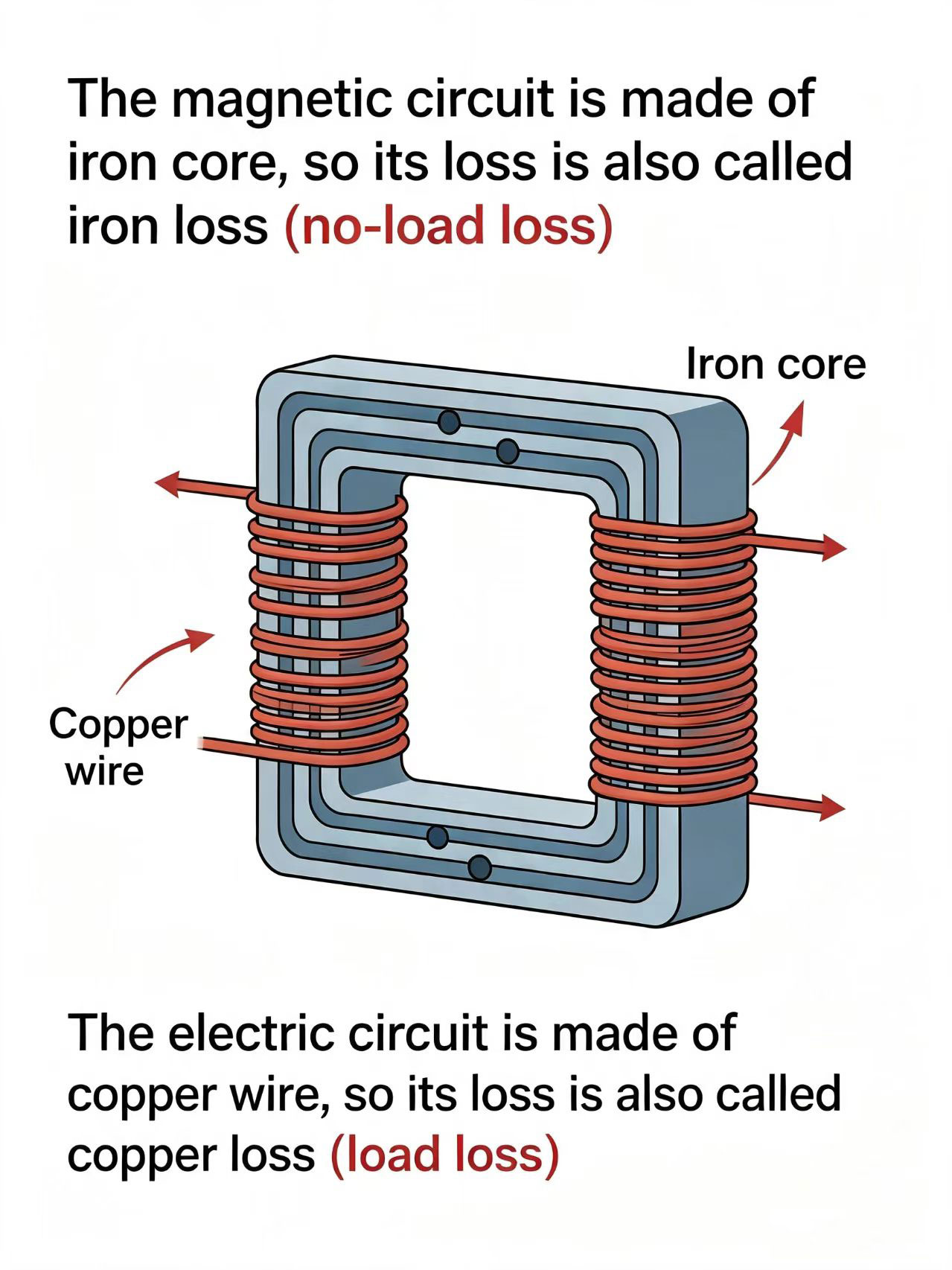
Transformer losses are mainly divided into two categories: Iron Loss (Core Loss) and Copper Loss (Winding Loss)
Each type of loss occurs due to different physical processes and varies depending on transformer operating conditions.
1. Iron Loss (Core Loss, No-load Loss)
Iron loss, also called core loss, no-load loss, occurs in the transformer’s magnetic core when alternating magnetic flux continuously changes during operation.
The changing magnetic field inside the core creates small circulating currents known as eddy currents. These currents generate heat within the core material, resulting in energy loss. Another component of iron loss is hysteresis loss, which occurs because the magnetic domains inside the core repeatedly change direction with alternating magnetization.
Unlike copper loss, iron loss is almost constant and does not significantly depend on the transformer load current. It mainly depends on:
* Core material quality
* Magnetic flux density
* Operating frequency
* Core design and construction
Using high-quality magnetic materials, such as cold-rolled grain-oriented silicon steel sheets, can significantly reduce core losses and improve transformer efficiency.
2. Copper Loss (Winding Loss, Load Loss)
Copper loss, also known as winding loss, load loss, occurs when electrical current flows through the transformer windings and encounters resistance.
According to Joule's law, the heat generated in the windings is proportional to the square of the current:
Copper Loss = I²R
Where:
* I represents the winding current
* R represents the resistance of the winding
Therefore, copper loss increases as the transformer load increases. During periods of heavy loading, higher current flow causes greater heat generation in the windings.
Copper loss can be reduced by:
* Using high-conductivity copper conductors
* Optimizing winding design
* Reducing winding resistance
* Improving cooling methods
Main Causes of Transformer Losses
Transformer losses are mainly caused by the physical operating principles of electromagnetic induction.
When a transformer is connected to a power supply, alternating current flows through the primary winding and creates a changing magnetic field in the core. This magnetic flux induces voltage in the secondary winding, allowing electrical energy transfer.
During this process:
* The changing magnetic flux creates eddy currents and hysteresis effects in the core, causing iron loss.
* The resistance of the windings causes heat generation when current flows, resulting in copper loss.
Additional minor losses may also occur due to:
* Leakage magnetic flux
* Dielectric losses in insulation materials
* Mechanical vibration and noise
* Stray losses caused by electromagnetic fields
Although these losses are unavoidable, proper design and maintenance can greatly minimize their impact.
Effects of Transformer Losses on Power Systems
Transformer losses directly affect energy efficiency, operating temperature, and equipment reliability.
Major impacts include:
1. Increased Operating Temperature
Energy lost as heat raises the transformer temperature. Excessive heat accelerates insulation aging, reducing the transformer’s expected service life.
2. Reduced Efficiency
Higher losses mean more electrical energy is wasted, increasing operating costs and reducing overall system efficiency.
3. Lower System Reliability
Continuous overheating and insulation deterioration may lead to transformer faults, unexpected shutdowns, and reduced stability of the electrical network.
For this reason, controlling transformer losses is an important part of power system management.
Efective Methods to Reduce Transformer Losses
Several strategies can be used to minimize transformer losses and improve performance:
1. Use High-Quality Core Materials
Selecting advanced low-loss magnetic materials, such as high-grade cold-rolled silicon steel, helps reduce hysteresis and eddy current losses.
2. Optimize Winding Design
High-quality winding techniques, proper conductor selection, and optimized coil structures can reduce resistance and minimize copper losses.
3. Improve Insulation and Structural Design
Efficient insulation systems and improved transformer construction help reduce leakage flux, dielectric losses, and unnecessary energy dissipation.
4. Maintain an Appropriate Load Level
Operating transformers at their optimal load range improves efficiency. Both overloading and prolonged underloading can increase energy waste and reduce performance.
5. Select Energy-Efficient Transformers
Modern high-efficiency transformers are designed with advanced materials and improved manufacturing processes to achieve lower no-load and full-load losses.
Conclusion
Transformer losses are an unavoidable part of electrical energy conversion, but they can be effectively controlled through proper design, material selection, and operating practices.
Iron losses mainly result from magnetic effects within the transformer core, while copper losses are caused by resistance in the windings. Both types of losses influence transformer temperature, efficiency, and service life.
By selecting low-loss materials, optimizing transformer design, maintaining suitable operating conditions, and using energy-efficient transformer technologies, electrical engineers can significantly reduce power losses, improve system reliability, and achieve more sustainable energy utilization.
Related Articles
Auto Transformer Working Principle
How Does Isolation Transformer Prevent Electric Shock?
What Is the Purpose of an Isolation Transformer?
Leave a Comment